AI Implementation & Delivery

I own the problem end to end: find the bottleneck, prove the fix, build it, get your team using it.

Recent result: implemented a bespoke AI system that cut a critical task from up to 8 hours to under 15 minutes, freeing up an estimated 1,500 hours a month across the team.

Andrew Laville
Andrew Laville 10+ years delivering IT programmes. 4 years putting AI into businesses.
Per task, on a critical process
8 hours down to under 15 minutes
Forecast savings, 2 businesses
£300K a year
From first demo to expert sign-off
2 weeks
Asset register migrated, zero downtime, £800K programme
Over £1 billion

What I bring to your business

  • Delivery experience.

    I have done the discovery, the business case, the build and the rollout on live AI systems. That’s why I can run the whole programme, not just one stage of it. Before AI, 10 years of IT programmes: a 15-person team, a £1B+ asset register moved with zero downtime, 75 staff at 100% adoption.

  • Proof before budget.

    I run a proof of concept on your own data, judged by the people who will use it, before anyone commits serious money. On the case study 1 system that took 2 weeks, and the business case followed with benefits tracking already in place.

  • Your team stays in control.

    The systems I build are governed by the people who use them, not by whoever wrote the code. Every decision is visible and auditable, every output can be overruled, and a manager can change the system’s behaviour without a developer or a release.

Case studies

Case study 2

20 hours a week back for a growing business

A well-run business doing a lot by hand. 8 automations and 1 tool later, the team has a working week back.

The opportunity

The business ran on several systems that each did their job well, with the team bridging between them manually. Monthly overtime was a good example: hours recorded by an engineer, collated in a master sheet, then entered into payroll. It worked, but it took 4 hours a month and relied on one person’s know-how. The owner could see AI should help and wanted to know exactly where it would pay before spending on it.

What happened next

  1. Found where the time was going

    Mapped the processes across operations, costed the manual steps, and ranked them by hours recoverable and ease of change.

  2. Set a roadmap the owner could fund

    Highest-return, lowest-risk items first, each stage paid for by the saving from the one before. No large up-front spend.

  3. Built it

    8 automations across the core systems, and a custom overtime tool anyone in the office can run. In daily use since implementation, now being extended with AI.

Inside the tool

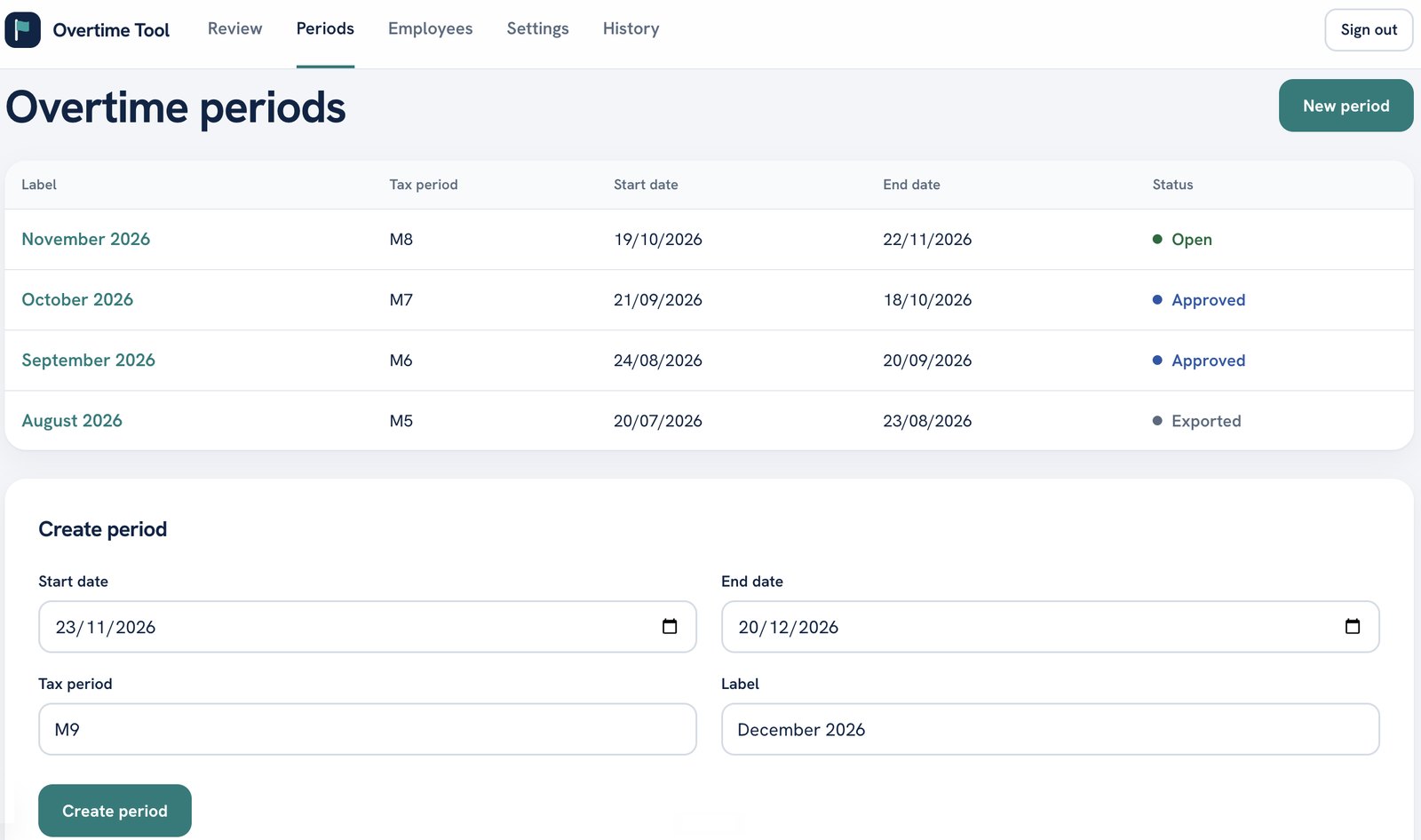
The Overtime Tool’s periods screen: November 2026 open, October and September approved, August exported, with a form to create the next period (opens a larger view)
Overtime periods, by tax period
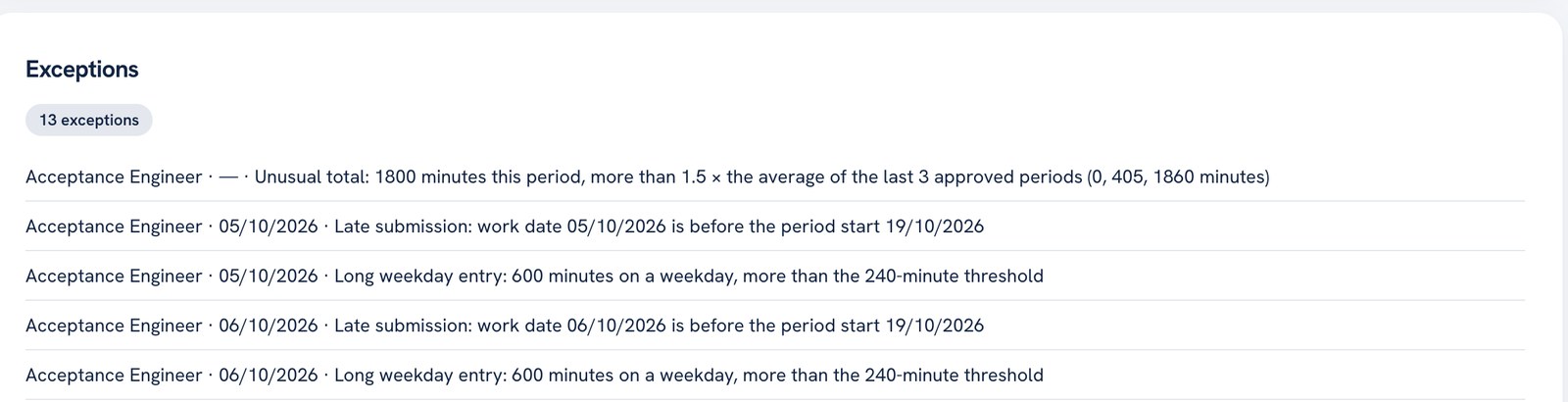
The Overtime Tool’s exceptions list: 13 exceptions, including late submissions, long weekday entries and an unusually high total (opens a larger view)
Automatic exception checks
Time returned
Estimated 20 hours a week across the business
Overtime run
4 hours a month → minutes, and no longer dependent on one person
Investment
Staged, each phase funded by the previous saving
Next: case study 3
Case study 3

A governance tool I built for myself

Other project managers now use it daily.

What it is

A project governance tool I built for myself, now used daily by several other project managers to run their programmes. It keeps the RAID log, decisions, actions and reporting in one place, and reads every meeting transcript the way a senior project manager would, looking for the risks nobody wrote down.

Status
In daily use on live programmes by me and several other project managers
Build
Designed and built end to end by me, directing AI coding tools

“I used to spend Friday afternoons rebuilding the RAID log from meeting notes. Now it’s done by the time the call ends, and twice it’s flagged a risk I’d have missed.”

Senior Project Manager, financial services
Back to case study 1

About me

I started in property and operations, running teams and improving processes, before spending more than 10 years in technology delivery, much of it in regulated and safety-critical environments. At West Midlands Metro, I led the implementation of a new asset management information system across a £1 billion asset register, moving the organisation from paper and spreadsheets to digital operations.

I have been building AI systems since 2022: first automations for small businesses, then end-to-end AI systems for business use, from discovery and business case through to implementation, risk management and adoption. Most AI projects don’t fail because the technology doesn’t work. They fail because the solution never gets adopted. Bridging that gap is what I do.

I hold a degree in Business Management from Royal Holloway, University of London. I continually test new models and tools, applying what I learn to build better systems.

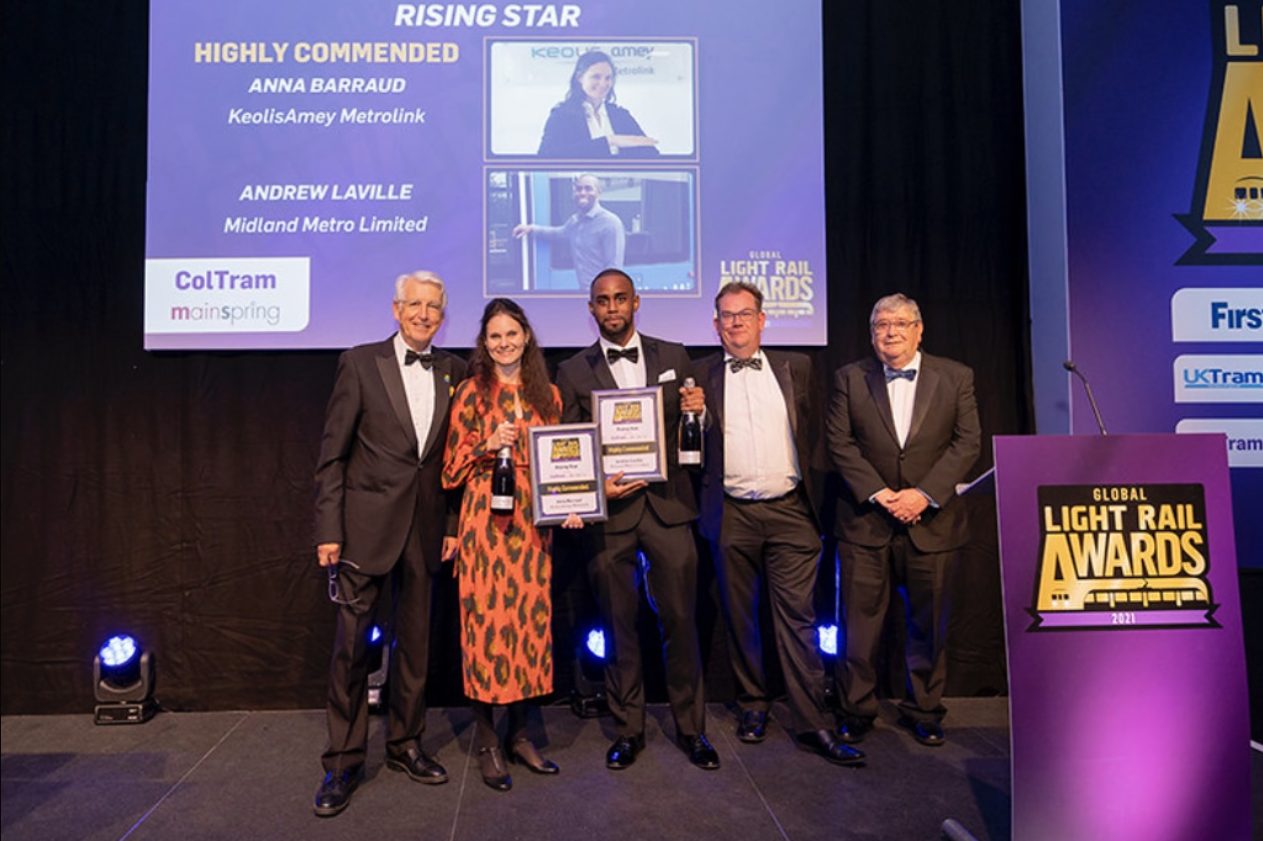
Andrew Laville on stage at the Global Light Rail Awards 2021, holding a Highly Commended certificate in the Rising Star category, with the other commended nominee and the presenters
Receiving a commendation at the Global Light Rail Awards for the West Midlands Metro asset management programme.

Hand me the problem

Send me the manual work you want gone, or the AI project that is stuck, and I will reply the same day with how I would approach it. If it is a fit, we can be on a call within 48 hours.